The Boys: A Ma Rainey’s Black Bottom Review
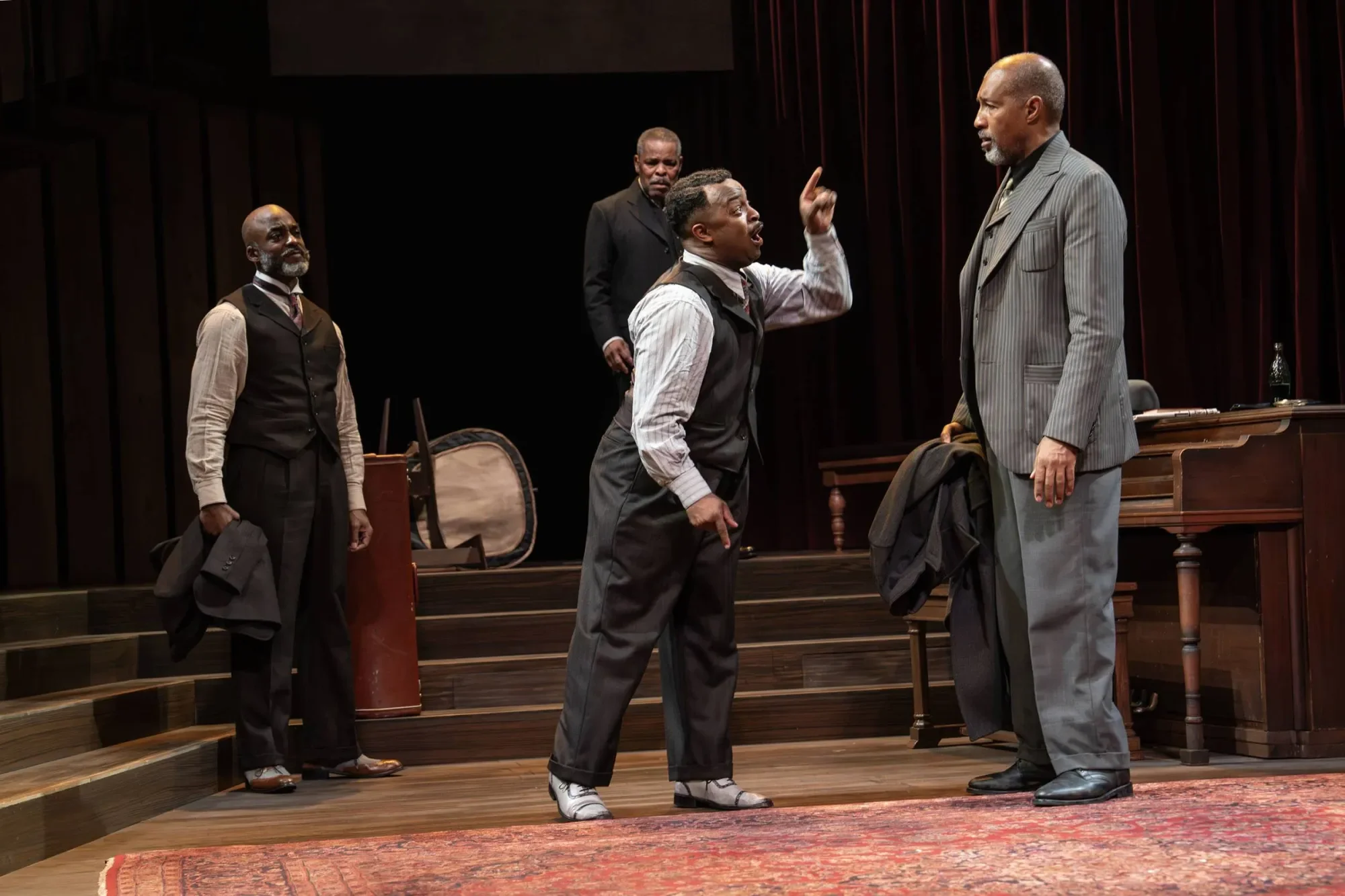
Cutler (Terence Archie), Slow Drag (Ray Anthony Thomas), Levee (Jimmie J.J. Jeter), and Toledo (Dion Graham) in Ma Rainey’s Black Bottom at Yale Rep. Theatre | Photo by Joan Marcus
“How can you be an artist and not reflect the times?” Nina Simone asked a poignant, soul-excavating question during a 1960s interview that still resonates today. The duty of an artist to reflect the forecast of the space and time they occupy is honored by the work of August Wilson in general, and is delicately littered throughout the writing of Ma Rainey’s Black Bottom in particular. Timothy Douglas, a David Geffen School of Drama alum, after serving as an understudy during the 1984 world premiere of Ma Rainey’s Black Bottom, returns to Yale to direct this production of Wilson’s classic.
The story, an ode, of sorts, to Gertrude Pridgett, the Mother of Blues, is set in a Chicago recording studio in 1927. Pridgett, Ma Rainey (Maiesha McQueen), is late for her session, and her manager, Irvin (Jeff Parker), is panicking at her absence while trying to fend off the studio owner, Mr. Sturdyvant (Neal Lerner). The boys are present and on time—three of the quartet, at least. Cutler (Terence Archie), Toledo (Dion Graham), and Slow Drag (Ray Anthony Thomas) prepare and wait for the delayed Ma Rainey while also wondering where their fourth, Levee Green (Jimmie J.J. Jeter), is.
Levee turns up late, though still before Ma Rainey, sporting new shoes that cost enough to stir conversation in the direction of folly and the fools who perpetuate it. Levee, the ever-defensive horn player, argues with Toledo and Cutler as the laid-back Slow Drag listens on and chimes in every so often. Toledo, the piano player and the most learned among them, aims to reason with them all. Cutler—trombone player and a man of faith—makes up for his lack of learning with the sensibilities afforded him through his reverence for God. The group dynamic, shaped by their respective temperaments, feeds the ebbs and flows of their dialogue as they wait for Ma to arrive.
Ma bursts onto the scene with much commotion, followed by her nephew, Sylvester (Mark Yarde), and Ma’s girl, Dussie Mae (Brittany Antoinette Davis), as they work through a confrontation with a policeman (Peter Bisgaier). The session unearths tensions, traumas, and grievances—burdens that shaped the blues genre while contributing to the tumult of African American life.
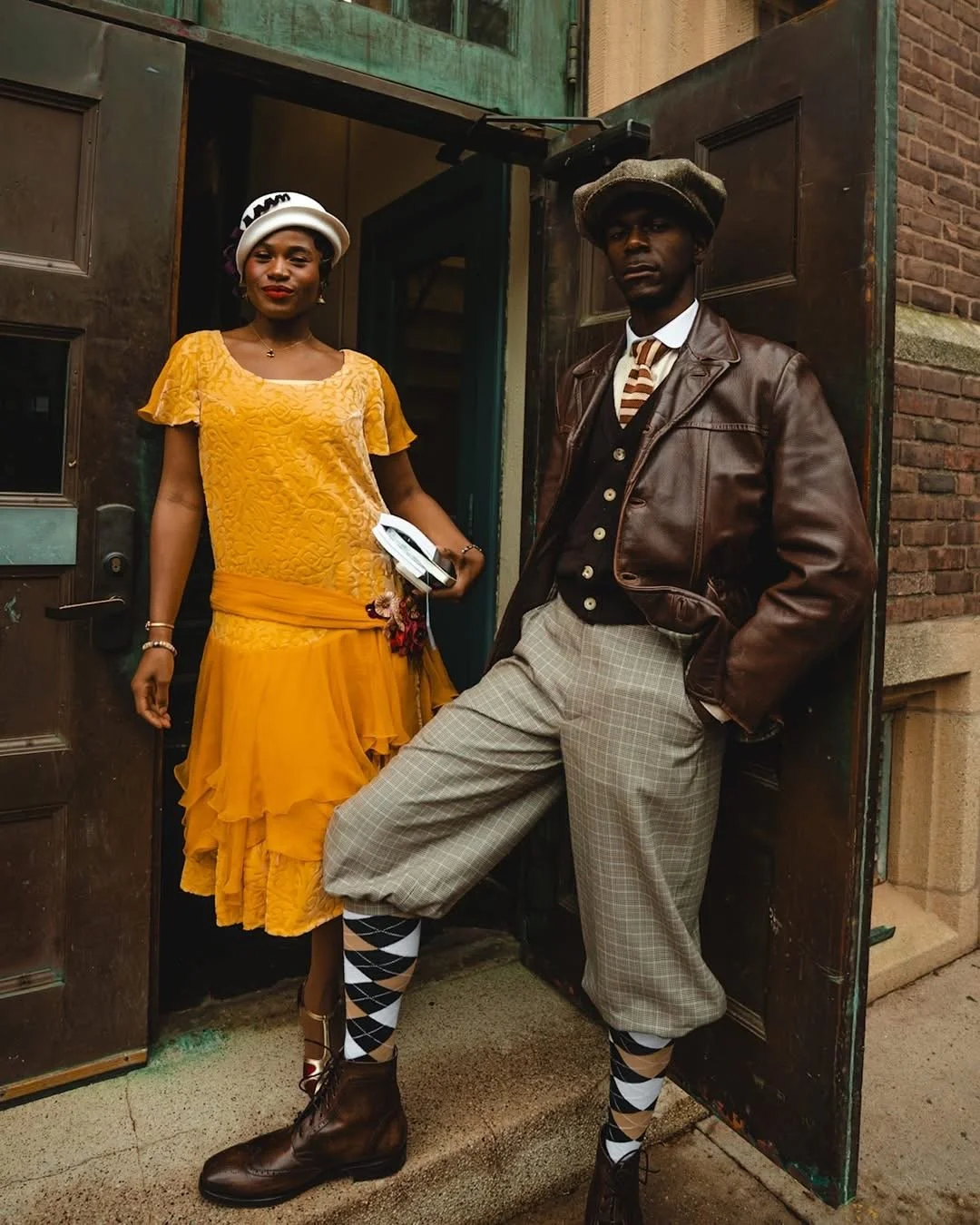
Dussie Mae (Brittany Antoinette Davis) and Sylvester (Mark Yarde) in Yale Rep’s production of Ma Rainey’s Black Bottom | Photo by Joan Marcus.
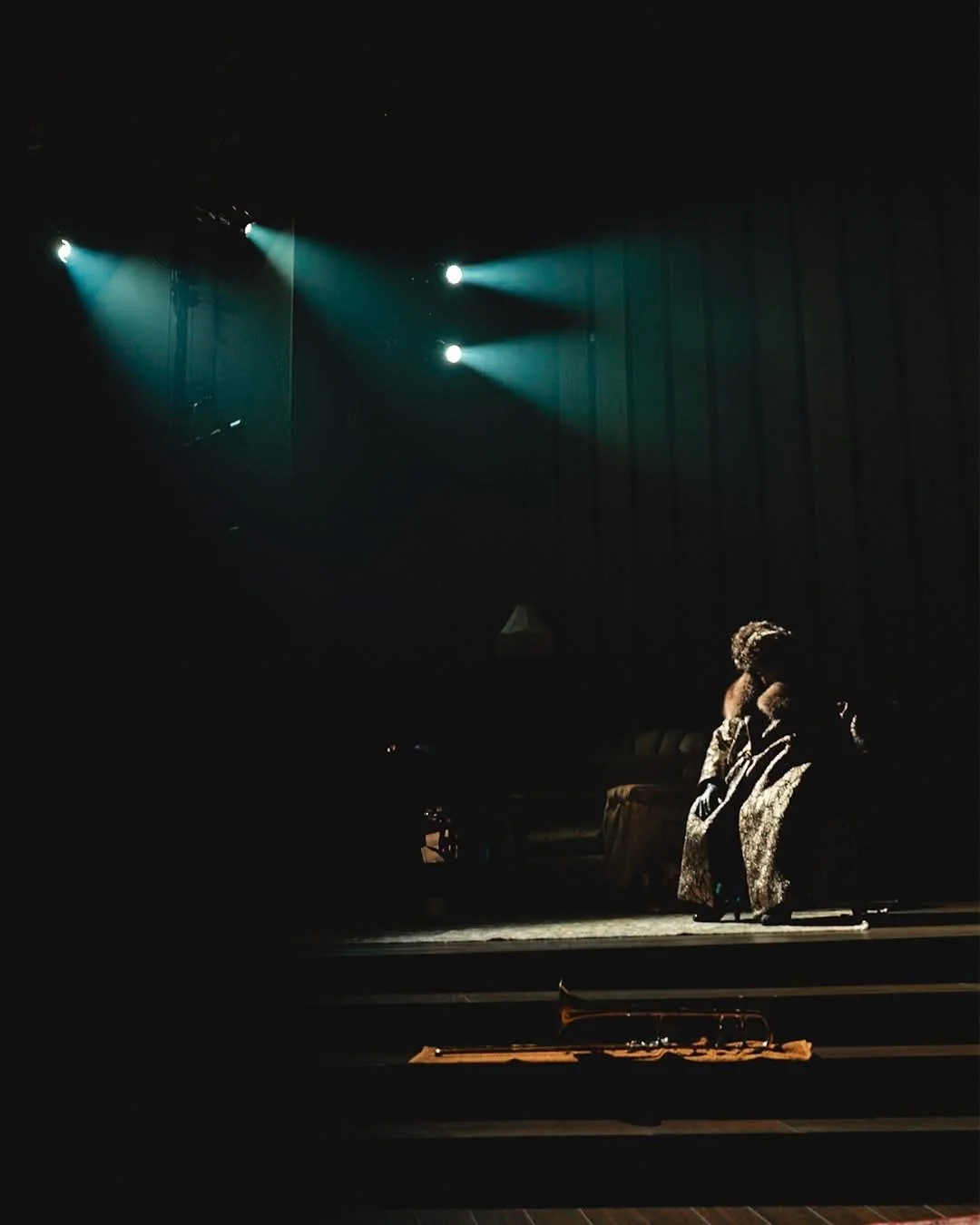
Ma Rainey in Yale Rep’s production of Ma Rainey’s Black Bottom | Photo by Joan Marcus
Lerner and Parker portray the delicacy of the post-slavery indignities that did not spurn African Americans outright like the horrors of slavery, but contributed to the “death by a thousand cuts” that microaggressions and gaslighting curate.
Thomas (Slow Drag) is a light-hearted delight, adding the levity needed to help digest such incredibly difficult truths. Archie (Cutler), a picture of stoicism and faith, grounds the dialogue between Levee’s head in the clouds and Toledo’s feet planted below ground-level. Graham (Toledo), a picture of wisdom and experience, offsets the tumult that is the cycling conversations.
McQueen is a firestorm of talent and emotion—gracefully carrying the weight of Gertrude Pridgett’s love and sacrifice (as presented in the character of Ma Rainey).
Jeter is in a class of his own—portraying Levee’s arrogant ignorance while convincingly demonstrating the emotional depth that often lies beneath the shallow words of the silliest fools.
The set features wooden paneled walls, an almost floating staircase leading to a listening booth suspended above the stage, and a floor-to-ceiling deep crimson velvet curtain hanging across from it. Below, a stage-level setup with stairs that descend into the band room. Richard Lee’s scenic design is a staunch representation of the 1920s aesthetic, with the accompanying tone of Robert Salerno’s vinyl scratch of a sound design for Ma’s blues. Toni-Leslie James’ costume design layers the era’s time-bound theme, honoring the signal to the “come up” that certain looks and feels of fabric denote, as unpacked in the dialogue surrounding Levee’s new shoes.
This production, with all its technical elements, is a masterclass in ambassadorship of historical work in the care taken to bring Wilson’s work to life.
This story highlights themes of rights, ownership, and control, weaving together the understanding of the relative newness of freedom for African Americans and the plight of their post-enslavement limitations. The juxtaposing of intellect and ignorance can be seen in the face-off between Levee, who is “ignorant without a premise,” and Toledo, who is jokingly called Booker T. for his love of reading. The call-back to the essence of slavery noted in Ma Rainey’s reservations about allowing Irv and Sturdyvant to take her voice and “trap it” in the little box with the buttons is reminiscent of the lack of voice enslaved Africans and their descendants suffered for. The proximity of this story’s timeline to the Great Migration heightens the tension between these artists’ ability to earn honest wages without the toil of their ancestors and the conflicting silhouette of soul-selling reflected in allowing the white man to profit from their creative and emotional labor.
The fight for creative control and ownership of Black artists’ works is still a very present conversation, with works of the likes of James Baldwin being fed into artificial intelligence programs to train generative LLMs—works that are revered and platformed today, though went without receiving their just due, due to opinions like that of Thomas Jefferson, who deemed the poetry of Phillis Wheatley (the first published Black woman poet in the U.S.) as “below the dignity of criticism.” The “death by a thousand cuts” that Wilson symbolically depicts resonates with present-day artists as much as it did for artists of his time and before.
Ma Rainey’s Black Bottom runs through October 24th. For tickets, visit https://yalerep.org/