New Money: The Great Gatsby Review
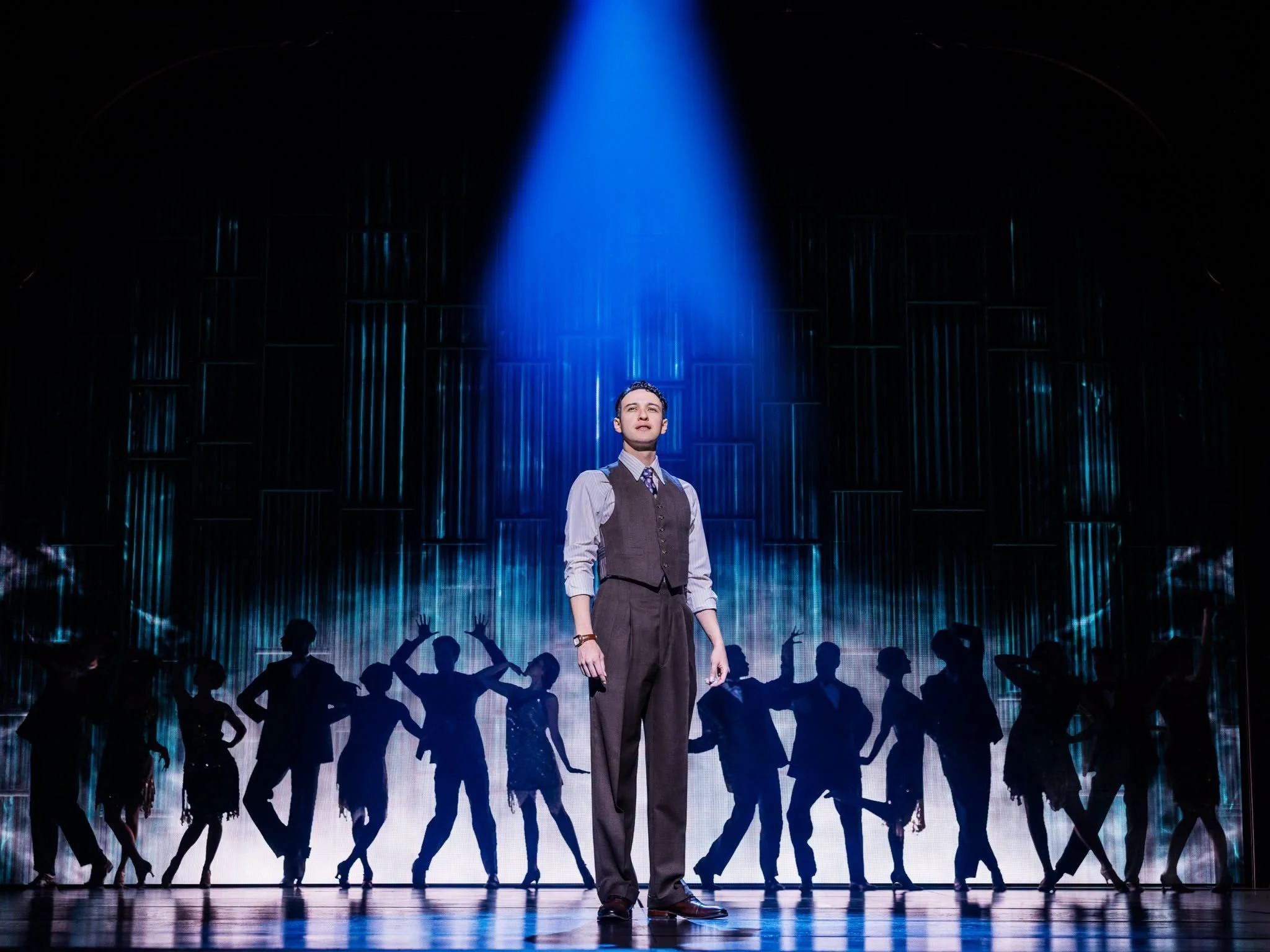
Joshua Grosso as Nick Carraway in The Great Gatsby Musical.
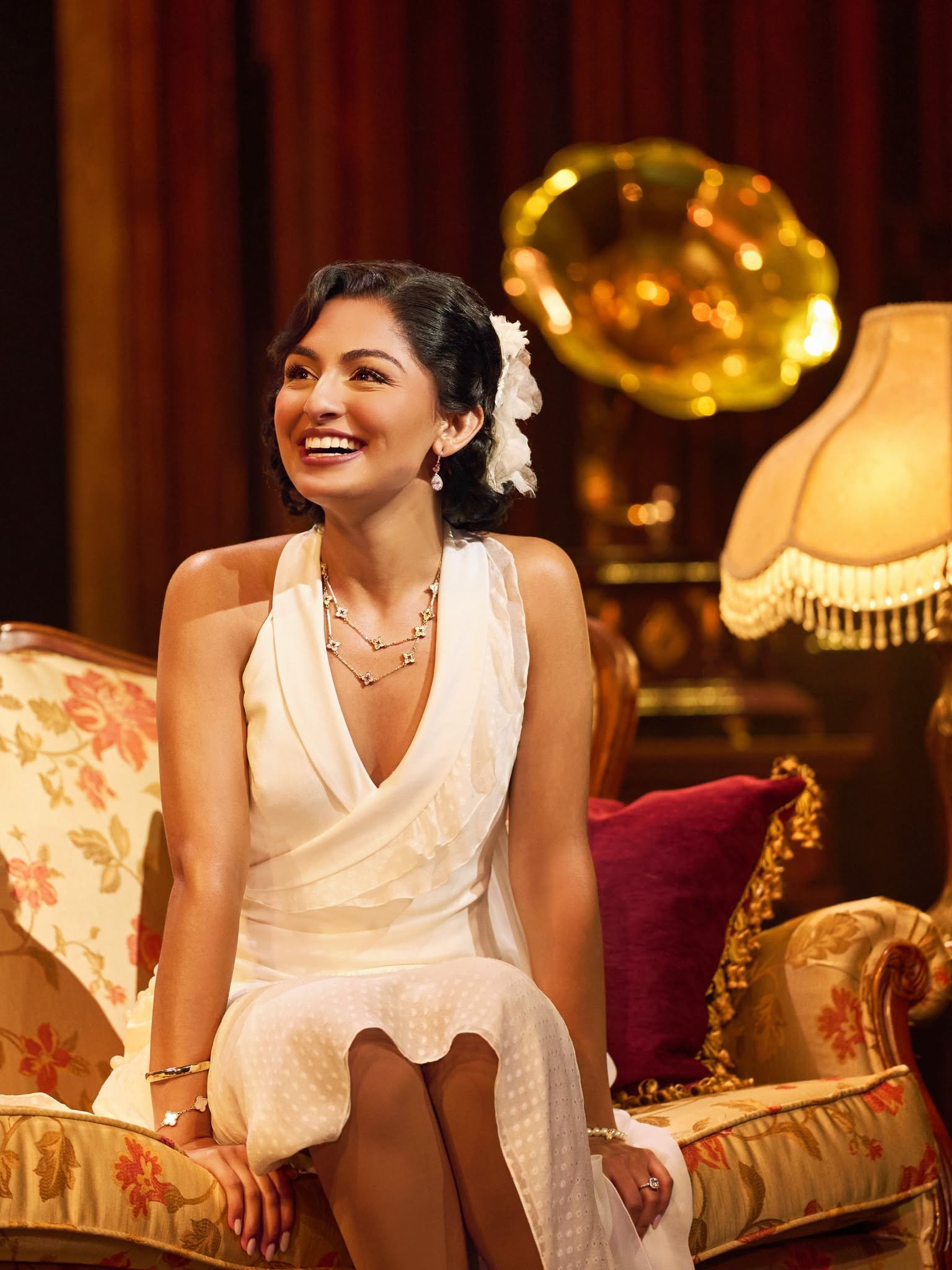
Senzel Ahmady as Daisy Buchanan in The Great Gatsby Musical.
Bushnell Theatre, with the expertise of Director Marc Bruni, brings Jay Gatsby’s New Year’s Eve in June to Hartford with some pomp and a whole lot of circumstance. This musical, based on F. Scott Fitzgerald’s The Great Gatsby, stuns audiences with its vibrancy while solidifying the timelessness of a story marked by desire and explorations of love.
The Roaring Twenties brought about a shift in culture following World War I. The upper echelon celebrated prosperity while cultural upheaval shifted the focus of high society. Prohibition backed party-goers into a corner from which bootlegging and underground speakeasies emerged. Jay Gatsby (Jake David Smith), a war veteran, a man in love with a chip on his shoulder and something to prove, emerges from the war with a new mission and a singular focus: Daisy Buchanan (Senzel Ahmady). Daisy, the face that launched a series of unfortunate events and the apple of Gatsby’s eye, married one old-money Tom Buchanan (Will Branner), when hopelessly romanticized thoughts of reuniting with Gatsby after their pre-war encounter faded. Gatsby, however, doesn’t give up so easily. Combating the limits of his station, Gatsby sets out to create the life of Daisy’s wildest dreams and stations himself just over the river from where she settled.
Enters Nick Carraway (Joshua Grosso), Daisy’s darling cousin who moves into the cottage next door to Gatsby. Carraway becomes integral to Gatsby’s plan to reconnect with Daisy. Daisy’s best friend Jordan Baker (Leanne Robinson) also becomes a catalyst for Daisy’s liberation from the throes of matrimony. Despite her early reservations, Tom, a brute of a man involved in extramarital dalliances, drives Daisy back into Gatsby’s arms but refuses to let her go without a fight.
This production does well to play up the class division between the long-established elites of East Egg society and the uncouth new money of West Egg, in which Gatsby, the exhibitionist, and his lavish parties become an affront to the elitists and their cultural sensibilities. This production also makes a show of the impoverished for whom survival is a way of life that does not make room for turning down work of any kind. While noting the cat-and-mouse games played with their free will by those with the money and the power, be it the likes of Tom Buchanan, Jay Gatsby, or Meyer Wolfsheim (Edward Staudenmayer), the shady bootlegging gambler at the center of Gatsby’s mysterious money-making operation. George (Tally Sessions) and Myrtle Wilson (Lila Coogan), victims of circumstance, are caught in the crossfire between old money and new, but refuse to leave empty-handed.
This production highlights several themes of Fitzgerald’s original work. The class division is not merely shown in the difference between Paul Tate dePoo III’s (scenic and projection design) gaudy Gatsby house and the quiet luxury of the Buchanans’ estate. It is also shown in Linda Cho’s (costume design) detailing of the immaculately tailored dresses of Daisy Buchanan in contrast to Myrtle Wilson’s off-the-rack, tucked-tag tastes. This is shown in the dignity of the depiction of Daisy’s dalliance with Gatsby versus the vulgarity of Tom’s secret apartment in which Myrtle and other low-rent women fulfill their pleasures.
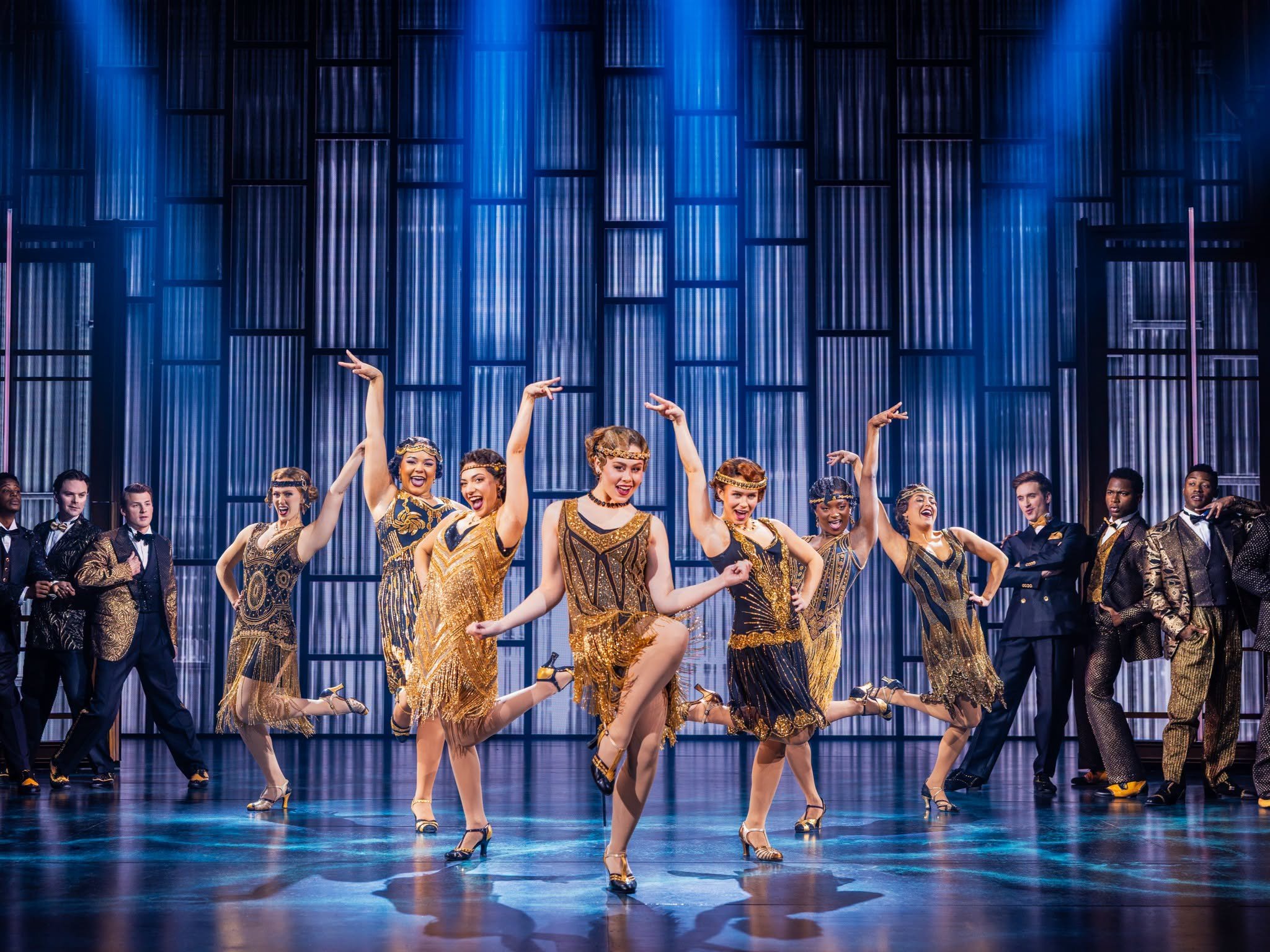
The musical numbers serve the unfolding plot well, while remaining engaging with a cast whose voices envelop audiences from beginning to end.
Smith and Branner’s characters come to life with each number, their strong characterization of Gatsby and Buchanan alive in each song.
Robinson’s voice sends ripples through one’s body without invitation, a beautiful instrument in itself, all while delighting the senses with the characterization of Jordan Baker alongside a most delightful depiction of Nick Carraway. Grosso’s charm is indisputable and permeates every note. Numbers such as “New Money” and “Better Hold Tight” tease audiences with a spark of romance carried by the unity of their voices.
Ahmady’s delicacy uplifts the emotional undertones of the woman-centered themes in numbers like “Absolute Rose” and “Beautiful Little Fool.”
Honorable mention goes to Staudenmayer in a formidable exploration of villainy in the musical number “Shady,” reminiscent of the ultimate villain numbers like Uncle Scar’s “Be Prepared” and Burrs “Room Where It Happens.”
The Great Gatsby’s elements are intricately woven to unravel Fitzgerald’s exploration of gender, class, and the pursuit of happiness as told by the indulgences of the elites. The sound design (Brian Rohan) brings each musical number to life while the lighting design (Cory Pattak) tells its own story in the hues of each scene. The choreography of Dominique Kelly and Cedric Dodd, alongside the execution of the ensemble (D’Marreon Alexander, Justin Scott Brown, Valeria Ceballos, Daniel Fullerton, Anna Gassett, Joann Gilliam, Josiah Hicks, Nina Michael Howland, Tyler Johnson-Campion, Joe D. McCoy, Macy McKown, Alli Sutton, Ryan Vogt, Shai Yammanee, Kyle Caress, Rosie Granito, and Kurt Kemper), leaves nothing to be desired.
Though the limited run of The Great Gatsby has ended, look out for future productions at The Bushnell. For tickets https://www.bushnell.org/