The Boys in the Bank: A Dog Day Afternoon Review
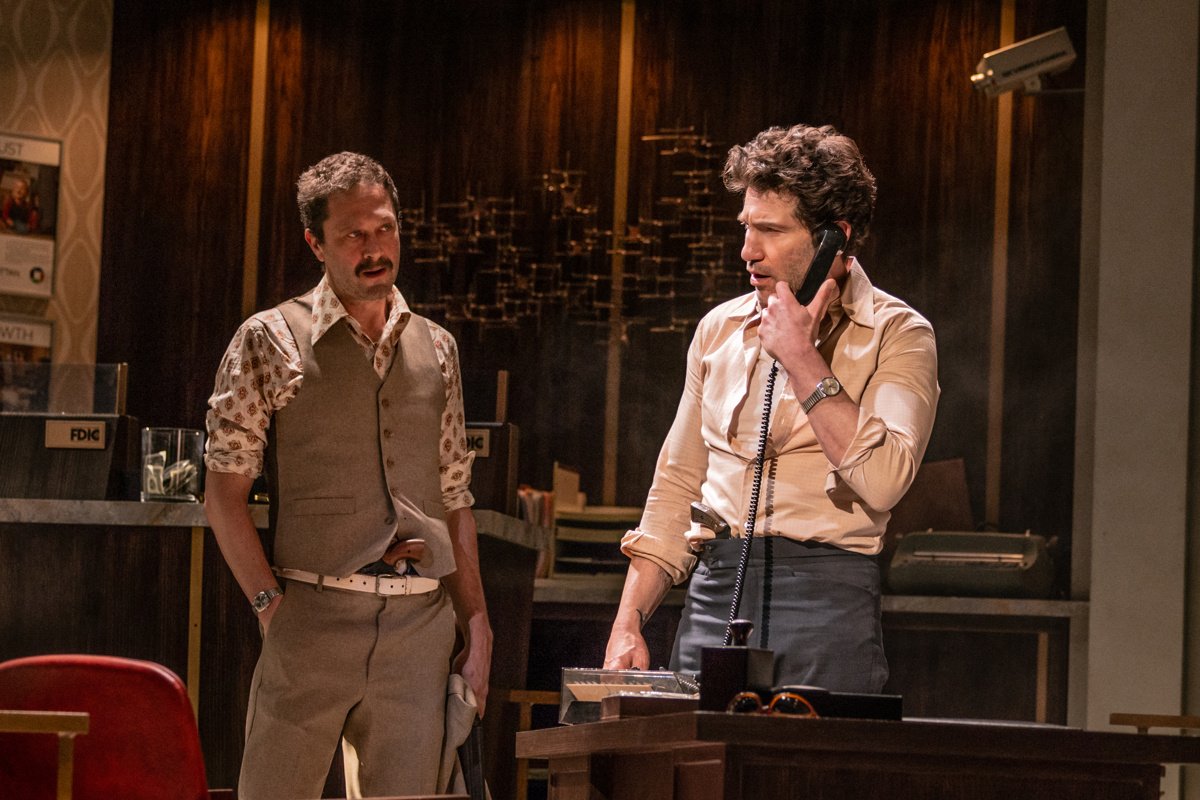
Ebon Moss-Bachrach as Sal and Jon Bernthal as Sonny in Dog Day Afternoon. © Matthew Murphy and Evan Zimmerman
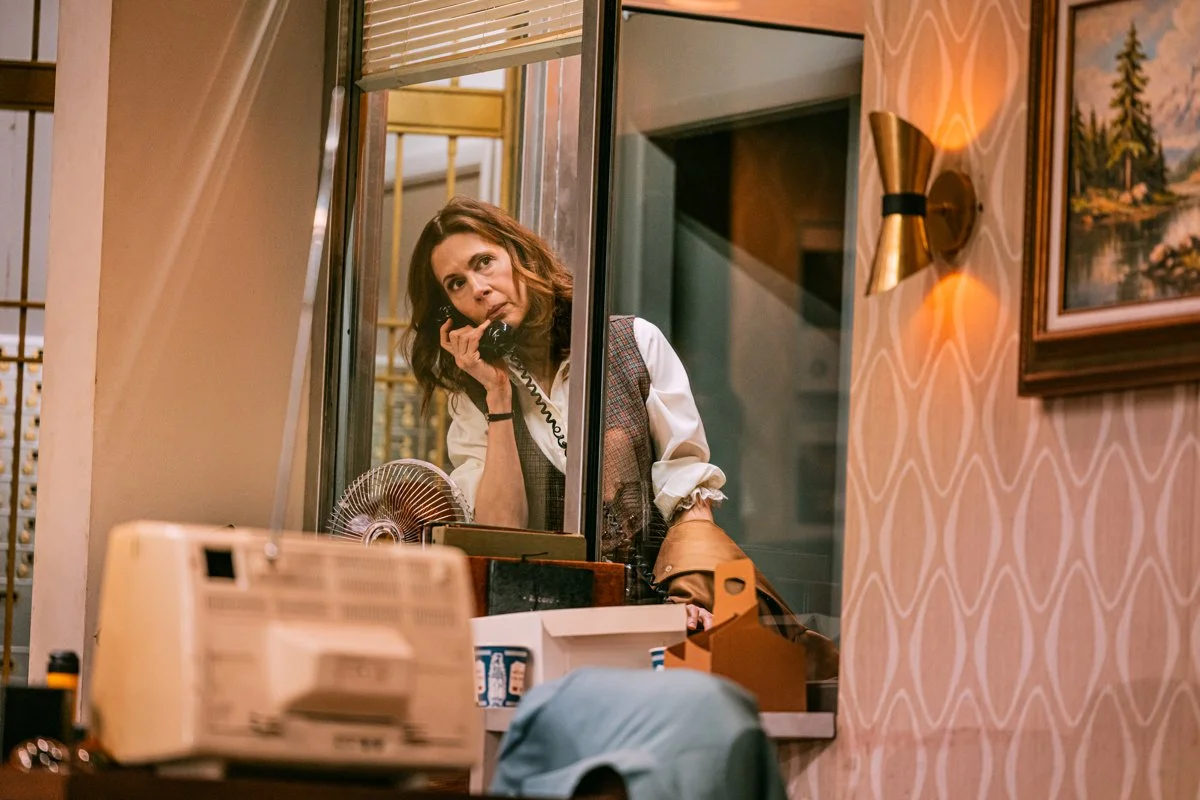
Jessica Hecht as Colleen in Dog Day Afternoon. © Matthew Murphy and Evan Zimmerman
The August Wilson Theatre hosts the production of Dog Day Afternoon, directed by Rupert Goold, based on the Warner Bros film of the same name and inspired by the true story of the August 1972 attempted robbery of the Chase Manhattan Bank in Brooklyn, New York. This production plays up the comedic undertones of the 1975 crime drama, lightheartedly touching on themes of gender identity and love, as well as the signs of the times. The heat of the summer, the weight of the Vietnam War, and the scandal of Watergate all encapsulate the irrationality of the unfolding events, leading to the question, how much external chaos can one absorb before it becomes what they do, or who they are?
Jon Bernthal’s Sonny, originally played by Al Pacino, leads the charge in a botched bank robbery with his sidekick Sal (Ebon Moss-Bachrach), originally played by John Cazale, that goes awry the moment it begins. The hostages, a handful of female bank clerks: Colleen (Jessica Hecht), Roxxanna (Elizabeth Canavan), Guadalupe (Paola Lázaro), Lorna (Wilemina Olivia-Garcia), and Alison (Andrea Syglowski), Mr. Eddy the security guard (Danny Johnson), and Mr. Butterman the bank manager (Michael Kostroff) warm up to the charismatic Sonny. His mastermind persona begins to unravel with each misstep, taking him closer and closer to the suicide pact that Sal expects him to keep. The intricacies of the most intimate corners of Sonny’s life are offered up for the public's scrutiny. Meanwhile, the sequestered group of bank employees begins to find some semblance of common ground.
The ensemble of bank workers brings levity to the drama, with Colleen carrying much of the comedy. Hecht turns a stickler into a rubber pencil as Colleen’s stringent personality cracks, making way for a pseudo-soft-hearted ally for Sonny. Bernthal and Moss-Bachrach’s chemistry, after their work in productions like Marvel’s The Punisher and Fx’s The Bear, creates a palpable shorthand in their dynamic, smoothing the lines between Sonny’s wordiness and Sal’s “speak when spoken to” persona. Bernthal isn’t a replica of Pacino. The nuances of live theatre require something altogether different— something that Bernthal does incredibly well: converging character versatility, layered body language, and a compelling delivery of emotional dialogue.
The production, set in 1972 Brooklyn, features a thoughtful, era-precise wardrobe that contributes to the time-period nostalgia (Costume design by Brenda Abbandandolo). The set, a revolving platform between the bank’s exterior and interior, is a stunner. The shift from outdoor to indoor scenes dislodges the frame in a subtle pan-out effect and rotates between the doors leading into the Chase Manhattan Bank and the shenanigans inside. The frequency and fluidity of this transition create a layer of drama that only the most phenomenal lighting and sound designs could hope to elevate (Scenic, lighting, and sound designs by David Korins, Isabella Byrd, and Cody Spencer, respectively).
The trajectory of the story, from actuality to film to the stage, has required many transitions, particularly in the somberness of the realities of the lives affected. While opinions vary, the reverence for the personhood of all involved cannot be lost, even in comedy, to those for whom life and the fragility of humanity are of the utmost importance.
Dog Day Afternoon continues on Broadway through July 12, 2026. For tickets, visit https://us.atgtickets.com/events/dog-day-afternoon/august-wilson-theatre/