How Indelicate: The Cottage Review
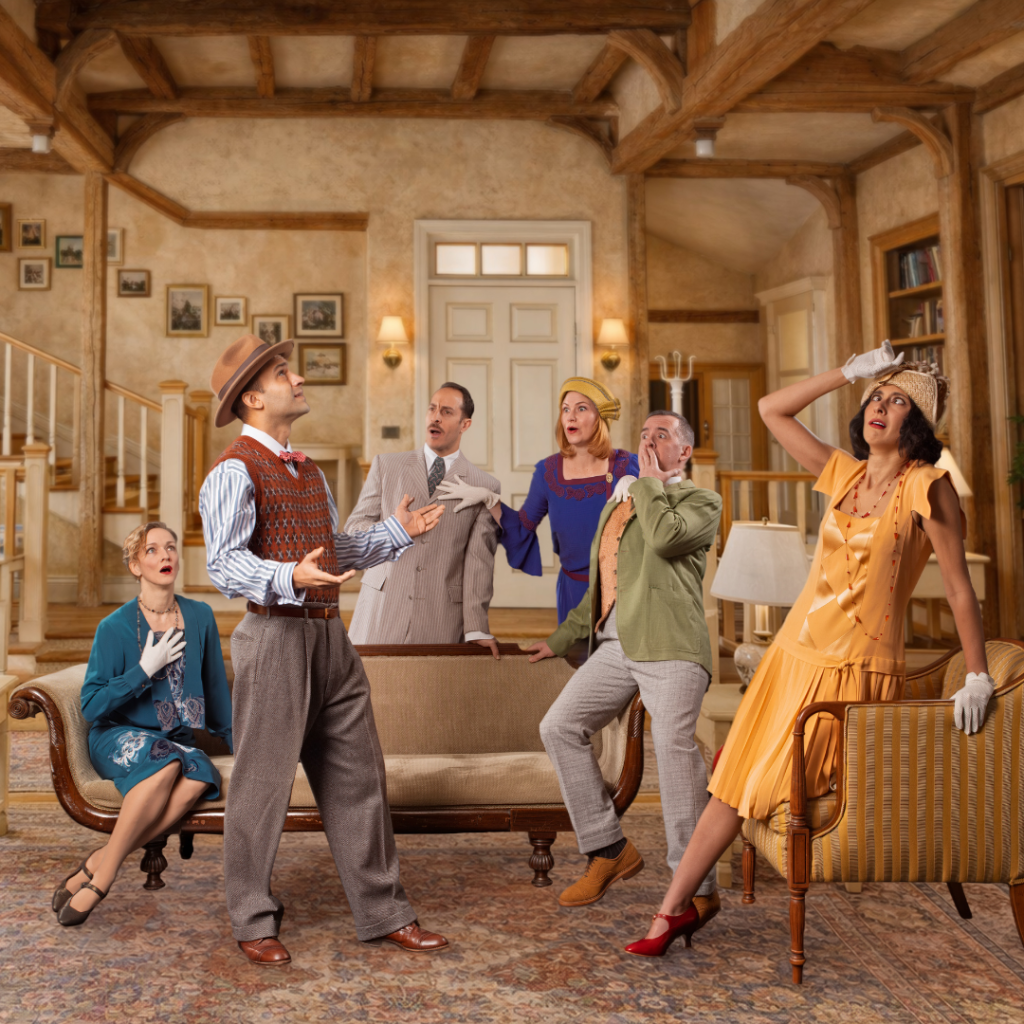
The cast of The Cottage, photos by Miceli Productions
Audiences are doubled over in laughter at Hartford Stage’s production of Sandy Rustin’s The Cottage, directed by Zoë Golub-Sass. Set in 1923, The Cottage folds into the popularity of the dramatic comedy stylings of farce and the shift in women’s rights under the Matrimonial Causes Act, which allowed wives to petition for divorce on the grounds of infidelity. This production explores the onset of women’s liberation with exaggerated amusement while redistributing the weight on the scales of double standards.
The love triangle has grown exponentially when Sylvia (Mary Cavett) declares her love for her lover, Beau (Jordan Sobel), informing him of a telegram sent to break the news to her husband, Clarke (Craig Wesley Divino). Sylvia’s lover’s wife, Marjorie (Kate MacCluggage), is also informed of the news. Before long, the love shack of a cottage is filled with infidels, including Sylvia’s lover’s lover, Dierdre (Jetta Juriansz), and her husband—ex-husband, Richard (Matthew J. Harris). What begins as an anniversary of two two-timers turns into a layered exposition of love lost.
Divino and Sobel amusingly transform the tawdry sentiments beneath acts of impropriety into a thing of play, while Harris convincingly folds over the duality of Richard and William’s gentlemanly and boorish ways. The three men highlight the spectrum of thought beneath the all-too-common mindless act of adultery. Juriansz, delightfully harebrained, in the most girls just wanna have fun way, is representative of the simplicity at the heart of many men’s desire—but with a twist. All while the heartfelt and brilliant efforts of honest womanhood, characterized by Cavett and MacCluggage, are faced with the two-step of a plight that has, for centuries, determined the worth of them and their counterparts. This well-cast ensemble’s comedic timing and embodiment of joy brilliantly deliver the thoughtfulness of Rustin’s work with the ease of Sunday morning.
The production is ushered in by sounds of waves crashing ashore, and the light chirping of birds against the sounds of Noël Coward’s Poor Little Rich Girl” on an old radio. The sound design of Nathan A. Roberts and Charles Coes elevates the stunning scenic design of Tim Mackabee—the honeyed woodwork of its exposed beams frames the lived-in interior, representing status and taste. The warmth of the sepia-toned set, off-set by florals, aged-wood, framed photos ascending the stairs, and functional lamps (lighting design by Evan C. Anderson) that enhance the tone and accents the seduction of the atmosphere. The costume design of Huner Kaczorowski announces the social performance of 1920s England, balancing structure and restraint with liberation of the transitory time in history.
This play’s rich subtext invites viewers to think beyond the comedy, all while being immersed in the lighthearted nature of the plot. The production design speaks, adding unspoken layers and nuance to the history that inspired the tale. This production is proof of the merit in Clive James’ quip that “common sense and a sense of humor are the same thing moving at different speeds—a sense of humor is just common sense, dancing.”
To join the fun, find tickets for The Cottage, available through February 8th, at https://www.hartfordstage.org/